Jun 7, 2020
This Organic Ice Cream Comes With A Side Of Hidden Veggies
Jessica Levison likes to juggle several balls at once. In 2008, not only was she a lawyer for Legal Aid Service fighting slumlords for low-income tenants in Florida, but she also decided to open up her own ice cream shop simultaneously—two completely different professional tracks she balanced for several years.
"Being an attorney and fighting on behalf of my clients was my favorite job," Levison tells me. Then they moved her to the children’s unit. "What I saw was heartbreaking. I was two months pregnant and I hadn’t told anyone. My new boss hated my guts and I wasn’t getting paid very much. Then our funding got cut and I got canned." So, Levison decided to focus all of her energy on her ice cream shop.
"I opened up my scoop shop because I just love ice cream," she tells me. She funded the store herself, pulled the permits, and managed the fit out all on her own. "I was continuously innovating with flavor profiles. The chefs at local hotels would ask me to make them unique sorbets with seasonal ingredients readily available—like carrot mango sorbet."
Since Levison was already making ice cream for her scoop shop in Surfside, Florida her wheels began to turn on how she could create a better-for-you option for the masses. "I wondered if I could I make an indulgent ice cream that contained organic veggies, but tasted identical to peoples’ favorite scoop of ice cream? What if I could introduce veggies where they least expected it—dessert?"
Two kids later and after lots of tinkering, taste testing, and experimentation Levison launched Peekaboo, the first and only organic ice cream with hidden veggies in 2018.

"As any parent knows, meal times are short, chaotic and messy," says Levison. "My goal is always a balanced meal but that isn’t always a reality. The reality is that sometimes getting my kids fed and happy is more than enough and we’ll leave the greens for tomorrow. Peekaboo offers people an indulgent treat that has hidden benefits—something people desperately need as many of us seek comfort in food in the stressful times we are all living with."
To be clear, Levison makes no claims that her product is a replacement for vegetables.
Levison attended Penn State's Ice Cream Short Course, the oldest, best known, and largest educational program dealing with the science and technology of ice cream. "It’s where Ben and Jerry studied," she tells me. Once Levison had her concept nailed down she self-financed her endeavor in the beginning and then opened it up to friends and family. "I am now mid-Seed round."
Currently, Peekaboo offers five flavors, with more on the way—including soon to be released vegan options.
When I ask her how she paired up the veggies with the flavors she tells me, "I knew I wanted to pair nutrient-dense and mild flavored or sweet veggies with very approachable ice cream flavors that would appeal to kids’ palates. There were some fails, to be sure, like vanilla with hidden turnip and unicorn with purple eggplant." Levison thought once her kids found out that vegetables were in their ice cream that they would refuse to eat it. "Instead, they just ask for seconds ‘because it has veggies!’," she excitedly tells me.
With baking being so precise in nature, I was curious how hard it was to come up with delicious flavor profiles where the vegetables are unidentifiable in the overall taste. She assures me it was no easy feat to create a product without altering the flavor or texture.
"When I started I would slowly continue to increase the quantity of veggies until my kids noticed the difference. That’s when I knew to scale it back a pinch. I also selected veggies that would complement each ice cream flavor. For example, the carrots add a unique balance of sweet and fruity undertones, which enhance the overall flavor; the beets add color and natural sweetness in addition to being a good source of vitamin C," she explains. Levison also had to factor in the water content of each vegetable she added to ensure the final product was creamy and indulgent in the end.
I have a prolific sweet tooth, but I only indulge in ice cream when it’s hot out. I was very impressed with Peekaboo and the fact that a serving, which is a 4-ounce scoop has anywhere between 13 leaves of spinach to a quarter of a zucchini in them (or other vegetables). That means I can indulge with a little less guilt.
May 25, 2020
Best Practices In Shopping Luxury Online
The COVID-19 pandemic has changed a lot of things in our lives, not the least of which is the way we shop. Many of us haven’t set foot in any establishment for the past several weeks, ordering such essentials as groceries online and having drinks with our friends via Zoom or some equivalent. And as the country gradually opens for business—whatever your thoughts on this—we will undoubtedly remain wary of what we used to call “life” and all the face-to-face interactions it entails.
I, like others, sense that things will be irrevocably changed by the time we reach the juncture of a new normal, though I don’t know precisely what this means for the retail scene. Our self-constructed cocoons, inherently lonely as they are, feel safe, and security will be high on our minds for the foreseeable future. Besides, there aren’t many shopping needs that can’t be met right from our own permanently indented couches. Right?
Buying things that typically require interaction can be trickier. Like experiencing the buttery tactility of a new leather purse. Or testing the weight and balance of a coveted writing instrument, understood only by true pen aficionados.
Not so, says Chris Sullivan, president of Fahrney’s pen shop in Washington, D. C. Having perfected the art of online commerce many years ago, he says a high-touch, taste-driven object, like a pen, may indeed be successfully purchased sight unseen. In fact, very little of his company’s modus operandi has changed during the past several weeks, even though the brick-and-mortar downtown store has temporarily closed its doors due to the novel coronavirus. Website, phone and catalog sales are booming, he shares, and the majority of Fahrney’s sales—as usual—are via its uber-friendly web store and its equally amicable catalog.
“Our parents started Fahrney’s catalog in 1975,” says Sullivan of the pre-internet venture. “It was a time of infancy for the catalog industry itself, yet alone a writing instrument catalog. All the pen brands, distributors and sales reps said it would never work! ‘Why would the customer buy from a catalog sight unseen without trying the pen first?’”
May 23, 2020
Is This The Best Way To Preserve Your Travel Memories (And Sanity)?
"All of humanity's problems stem from man's inability to sit quietly in a room alone." Though the philosopher Blaise Pascal wrote these words in 1654, they still ring true over three centuries later. As Covid-19 has resulted in a mass lockdown throughout the country (and indeed the world), the stir-crazed side effects of said isolation is a pandemic all its own.
But, before I reveal the solution to restoring your sanity amidst the ongoing distancing of the self, a confession: Before quarantining this past March, I was—to put it lightly—the opposite of locked down. As a travel writer, I ventured to 41 countries in the past 23 months under the guise of professional advancement and personal fulfillment—never staying in one place long enough to unpack my bags and catching the next flight like it would be my last.
Though no one on the planet could have predicted the virus's ferocious spread back in 2018, it's safe to say I'd spent the past two years traveling as if a plague was coming. One that would confine you to your trustiest, most reliable form of shelter—for celebrities, a Beverly Hills mansion, for others, perhaps a one-bedroom apartment. For me: My childhood bedroom. (Travel writers aren't known for maintaining stately personal residences.) And, though my years of traversing the globe seemed to fly by in minutes, the past two months in lockdown seem to have lasted two lifetimes and more.
I'd argue that it's not only the absence of variety that has caused the widespread blues while sheltering-in-place but also the lack of freedom of movement. It's losing the mere possibility of venturing beyond our mundane day-to-day lives that's caused such a tremendous dearth of inspiration and excitement. You don't need to be a professional globetrotter to mourn the sense of opportunity that travel inspires, the idea that you can jet off to France—not today, not tomorrow, and, now, maybe not until the end of December. (2021 will be our year.)
But, before I reveal the solution to restoring your sanity amidst the ongoing distancing of the self, a confession: Before quarantining this past March, I was—to put it lightly—the opposite of locked down. As a travel writer, I ventured to 41 countries in the past 23 months under the guise of professional advancement and personal fulfillment—never staying in one place long enough to unpack my bags and catching the next flight like it would be my last.
Though no one on the planet could have predicted the virus's ferocious spread back in 2018, it's safe to say I'd spent the past two years traveling as if a plague was coming. One that would confine you to your trustiest, most reliable form of shelter—for celebrities, a Beverly Hills mansion, for others, perhaps a one-bedroom apartment. For me: My childhood bedroom. (Travel writers aren't known for maintaining stately personal residences.) And, though my years of traversing the globe seemed to fly by in minutes, the past two months in lockdown seem to have lasted two lifetimes and more.
I'd argue that it's not only the absence of variety that has caused the widespread blues while sheltering-in-place but also the lack of freedom of movement. It's losing the mere possibility of venturing beyond our mundane day-to-day lives that's caused such a tremendous dearth of inspiration and excitement. You don't need to be a professional globetrotter to mourn the sense of opportunity that travel inspires, the idea that you can jet off to France—not today, not tomorrow, and, now, maybe not until the end of December. (2021 will be our year.)
Apr 22, 2020
You Have To Make This Cocktail: Double Smoked Old Fashioned
Who needs a drink?
We’ve got nothing but time on our hands.
With this truth, unfortunately, many crappy cocktail recipes have surfaced, as ill-advised marketers pump out over-syrupy recipes just to get content on the Web to take advantage of an audience eager to drink at home. Promoting is not a bad thing, per se, but trying to get people to drink poor cocktails at home, well, that’s punishable by melting-too-quickly ice in your next drink.
However, there’s hope a good drink can still be had, created and perfected by a genuinely brilliant bartender.
Meet Charles Joly, bartender and owner of Crafthouse Cocktails, which are the ready-to-drink cocktails we all wish would replace White Claw. Joly is the only American to win World Class Bartender of the Year.
While you cannot sit across from Joly at the moment and watch his amazing technique, you can have one of his bottled cocktails at home. And for Forbes readers, he’s created an amazing Old Fashioned recipe that you must try.
Plus, in a recent YouTube interview, Joly gave me multiple tips to making cocktails at home, which many are trying to do as they’re isolated. And none couldn’t more pertinent than his advice for keeping an eye on your fruits. “If you see a fruit is close to turning [bad], make a syrup out of it,” he says, of course, with intent to use on a drink later or maybe even pancakes. Less waste is key for surviving these days...
Joly’s recipe for an Old Fashioned is just what we all need to get through these isolated times.
We’ve got nothing but time on our hands.
With this truth, unfortunately, many crappy cocktail recipes have surfaced, as ill-advised marketers pump out over-syrupy recipes just to get content on the Web to take advantage of an audience eager to drink at home. Promoting is not a bad thing, per se, but trying to get people to drink poor cocktails at home, well, that’s punishable by melting-too-quickly ice in your next drink.
However, there’s hope a good drink can still be had, created and perfected by a genuinely brilliant bartender.
Meet Charles Joly, bartender and owner of Crafthouse Cocktails, which are the ready-to-drink cocktails we all wish would replace White Claw. Joly is the only American to win World Class Bartender of the Year.
While you cannot sit across from Joly at the moment and watch his amazing technique, you can have one of his bottled cocktails at home. And for Forbes readers, he’s created an amazing Old Fashioned recipe that you must try.
Plus, in a recent YouTube interview, Joly gave me multiple tips to making cocktails at home, which many are trying to do as they’re isolated. And none couldn’t more pertinent than his advice for keeping an eye on your fruits. “If you see a fruit is close to turning [bad], make a syrup out of it,” he says, of course, with intent to use on a drink later or maybe even pancakes. Less waste is key for surviving these days...
Vestidos de noiva
Joly’s recipe for an Old Fashioned is just what we all need to get through these isolated times.
Mar 20, 2020
Classic Reading For our Quarantined Times
Much of the nation, if not the world, is sheltering in place—many of us alone at home and feeling uneasy about our times. To keep from obsessing about my financial portfolio (or what's left of it) and chickpea and pasta larder, I scanned my bookshelves in search of something to feed my mind, if not my soul. I usually have down time for reading only when I travel, and then I like reading in context. But what are the options when your wanderlust is hobbled during a pandemic lockdown?
Turns out there are plenty. When I asked friends for their reading recommendations, I ended up with a long and intriguing list — too many tomes, in fact, to include here. After a pleasurable day of researching reviewers notes, I divided the list, which I'll present in two parts. The first installment for your reading pleasure: classic literature and historic chronicles.
Oh, and as a wine journalist, I can't not think about what I'd like to drink, so each book comes with a wine pairing, if for no other reason than to be reminded of how wine gets us through the best of times and the worst of times (Sorry, Dickens!)
Turns out there are plenty. When I asked friends for their reading recommendations, I ended up with a long and intriguing list — too many tomes, in fact, to include here. After a pleasurable day of researching reviewers notes, I divided the list, which I'll present in two parts. The first installment for your reading pleasure: classic literature and historic chronicles.
Oh, and as a wine journalist, I can't not think about what I'd like to drink, so each book comes with a wine pairing, if for no other reason than to be reminded of how wine gets us through the best of times and the worst of times (Sorry, Dickens!)
Formal Dresses
Jan 20, 2020
Looking Back And Ahead: Sustainable Fashion In 2019
Sustainability has been a hot topic in the world of fashion this year.
From new certifications to strategic partnerships between brands and beyond, 2019 has been a year in which retailers stepped up their green efforts—despite reports that showed consumers don't always want to pay for the extra costs associated with sustainably-made products.
Be that as it may, fashion industry insiders like Pierre Kim, the Head of Apparel at Away, believe that 2019 was a watershed year in that the fashion industry made real strides to redefine the entire ecosystem of fashion.
He believes the linchpin of these efforts was the signing of the G7 Fashion Pact and the UN's Sustainable Fashion Industry Charter for Climate Action. Both agreements, which were signed by more than 150 fashion brands this year including the likes of Kering, Gap, Nike, Adidas, H&M, and Chanel, focused on reducing the industry's contribution to climate change.
“This was the first time major industry players set a level of ambition consistent with the UN Paris Agreement goal of keeping global temperature rise below 1.5 degrees Celsius via net-zero greenhouse gas emission goals, the use of renewable energy sources, and more,” Kim said.
Wedding Dresses
From new certifications to strategic partnerships between brands and beyond, 2019 has been a year in which retailers stepped up their green efforts—despite reports that showed consumers don't always want to pay for the extra costs associated with sustainably-made products.
Be that as it may, fashion industry insiders like Pierre Kim, the Head of Apparel at Away, believe that 2019 was a watershed year in that the fashion industry made real strides to redefine the entire ecosystem of fashion.
He believes the linchpin of these efforts was the signing of the G7 Fashion Pact and the UN's Sustainable Fashion Industry Charter for Climate Action. Both agreements, which were signed by more than 150 fashion brands this year including the likes of Kering, Gap, Nike, Adidas, H&M, and Chanel, focused on reducing the industry's contribution to climate change.
“This was the first time major industry players set a level of ambition consistent with the UN Paris Agreement goal of keeping global temperature rise below 1.5 degrees Celsius via net-zero greenhouse gas emission goals, the use of renewable energy sources, and more,” Kim said.
Wedding Dresses
Dec 29, 2019
How Fashion Saved This High School Math Teacher's Life
When I wore a Diarrablu dress to celebrate Thanksgiving, everyone the beautiful wrap design, dramatic sleeves, and bold print made quite a splash.
When I told my friends and family the pattern was generated by a math equation and designed by a Senegalese woman who lost her memory and nearly died on her path to becoming a designer, they wanted to know the whole story, naturally.
I'm guessing you're intrigued now, too, so voila: Diarra Bousso's evolution from math nerd to Wall Street bond trader to creative math teacher and fashion designer—and how she nearly lost her life along the way.
And no, she doesn't plan on choosing between the math and fashion any time soon.
"I almost feel like it's too good to be true, that I can do both things," Bousso told me. "Not just for me—the fashion brand is uplifting entire communities and artisans and providing jobs. And my work in education and research is getting kids to care and learn and be successful."
Her arrival at this poised position didn't come easy. The fulcrum of Bousso's story is a life-threatening accident in 2012 when she was 23 that left her paralyzed and with no memory. The event was precipitated by a bout of severe depression, and in Senegalese culture at the time, Bousso says mental health was considered embarrassing and not discussed openly. Hence, she kept much of her story private.
But with nearly eight years of recovery and perspective behind her, plus her current success as both a high-school math teacher and a designer (she's currently a designer-in-residence at Fashion Incubator San Francisco)—she's ready to share.
"It took being a teacher to realize the importance of mental health and the need to share it openly and ask for help when needed," Bousso said. "In my case, I fell into depression while working on Wall Street because I had chosen the wrong path and was miserable and felt no purpose. I didn't know what depression was, in my culture we never talked about such a thing."
Bousso is private about the specifics of the accident itself, although she's certain her depression caused it. Her art, fashion, and, surprisingly, Tumblr, all played a role in her journey to recovery.
As a teen, Bousso was a bright student who wanted to be rich. She also wanted to be a cool, respected artist and fashion maven, inspired by her stylish mother who designed most of her own wardrobe using fabrics collected from travels around the world. But no one in Bousso's family believed art was a viable career path. It was a fun hobby, and she was a gifted painter inspired by Picasso and cubism. But art wouldn't make her the earner she impatiently dreamt of becoming.
At 16, she declared to her parents that she was bored with school in Senegal and wanted a challenge. She informed them she'd be moving to Norway as one of just three students accepted by United World Colleges (she'd applied without her parents' knowledge) to study in the Nordic country. They said she was too young—she could go abroad for college in France after graduating high school, the natural progression for a smart Senegalese student.
Nov 24, 2019
Can Rich Content Improve Education?
Modern high-stakes testing really kicked into gear with No Child Left Behind, and then got another huge boost with the advent of Common Core. All through that era, teachers pushed back against the fracturing of reading instruction, the idea that reading is a suite of discrete skills that can be taught independent of any particular content.
The pendulum has begun its swing back. Content knowledge is coming back into vogue, and while there are plenty of cognitive science-heavy explanations out there, the basic idea is easy to grasp. If you know a lot about dinosaurs, you have an easier time reading and comprehending a book about dinosaurs. If you are trying to sound out an unfamiliar word on the page, it's easier if you already know the word by sound. If you learn and store new information by connecting it to information you already have banked, that process is easier if you actually have plenty of information already stored away.
Classroom teachers have known this. Some have argued that the Common Core acknowledged this (but did so in the appendix, none of which is tested material). And while much of the education reform crowd joined the "skills" push (one attempted catchphrase of the new SAT created under Common Core creator David Coleman was "skilled it"), some reformers never lost faith in the work of Ed Hirsch, Jr., who has himself stayed committed to the idea through his Core Knowledge Foundation.
prom dresses
The pendulum has begun its swing back. Content knowledge is coming back into vogue, and while there are plenty of cognitive science-heavy explanations out there, the basic idea is easy to grasp. If you know a lot about dinosaurs, you have an easier time reading and comprehending a book about dinosaurs. If you are trying to sound out an unfamiliar word on the page, it's easier if you already know the word by sound. If you learn and store new information by connecting it to information you already have banked, that process is easier if you actually have plenty of information already stored away.
Classroom teachers have known this. Some have argued that the Common Core acknowledged this (but did so in the appendix, none of which is tested material). And while much of the education reform crowd joined the "skills" push (one attempted catchphrase of the new SAT created under Common Core creator David Coleman was "skilled it"), some reformers never lost faith in the work of Ed Hirsch, Jr., who has himself stayed committed to the idea through his Core Knowledge Foundation.
prom dresses
Oct 26, 2019
Mercedes-Benz Fashion Week Istanbul Marks Ten Years Of East Meets West Fashion On Its Runways
Istanbul has come a long way in establishing itself as a fashion destination, considering that in 2008, Istanbul Fashion Week was only a fashion lab. Today is has the support of its title sponsor, Mercedes-Benz, and was attended by over 20,000 visitors who flocked to Turkey’s capital four-day event. With conversations around inclusivity dominating the fashion industry in recent years, the theme of Spring/Summer 2020 Mercedes-Benz Fashion Week Istanbul was fitting: #Together. Held at the Zorlu Performing Arts Center on October 8-11, 2019, it marked the 10th anniversary of MBFW Istanbul, where guests admired collections as well as participated in conversations centered around the industry’s shifting values.
A mix of seasoned and emerging designers showcased their collections, and for the first time,“Pioneering Designers”, a selection of up-and-coming designers, presented their work in group fashion shows. Among those was Turkish-based Armenian designer Emre Pakel, who founded his label in June 2018 just five months after winning the Koza Young Fashion Designer Award, a ‘prestigious Turkish fashion contest and Aegean export union designers contest’. Fast forward to present day, this season Pakel presented his spring-summer 2020 collection, titled "Pakel Cooperation", which channels Japanese street style in response to Hollywood fashion.
Mercedes-Benz Türk, the Turkish outpost of German automobile company, chose to support emerging Turkish designer Kadir Kılıç and his brand MiiN, with the “Mercedes-Benz presents Miin by Kadir Kılıç” runway show of his Spring/Summer 2020 collection. Kılıç, an alumnus of Işık University as well as Polimoda International Institute of Fashion Design & Marketing, presented a collection that was a radical departure from MiiN’s core black-and-white aesthetic. Drawing inspiration from the work of abstract expressionists, Kılıç infused color and texture into a timeless collection that spanned all seasons. MiiN’s usual minimalist color palette was shaken up by hints of baby blue, pastel pink, lilac and mints, as well as vibrant neons of yellow, green and blue. From graphic printed pant-suits and neon orange translucent jackets, to metallic silver rain jackets and navy-blue coats speckled with glitter, the collection balances timeless style with ergonomics and functionality.
Aug 1, 2019
Fashion Designer Roksanda Ilinčić Curates The Prettiest Penthouses In London
Roksanda Ilinčić is known for giving seriously cool catwalk looks, and now she’s turned her talented hand to interior design.
The designer has beautifully offered her own take on The Penthouse at Gasholders London, specially curating interiors and artwork. The penthouses are apart of a landmark residence, built within a refurbished triplet of Grade II-listed, cast-iron gasholder guide frames in the heart of London’s King’s Cross.
Working with the three-bedroom duplex penthouse, Roksanda had the opportunity to go to town on the aesthetics and she did just that. As one would expect, there’s an elegant amalgamation of furniture, art, ceramics, books and objet d'art, creating a contemporary and exquisitely stylish narrative between rooms.
Roksanda has primarily focussed on women makers, both established and emerging. The space features murals, artwork, and textiles by Caroline Denervaud which act as a beautiful backdrop to the furniture by Lina Bo Bardi and Charlotte Perriand. Expect objects and ceramics by Australian ceramicist Alana Wilson, Berlin-based potter Christine Roland and Londoner Annette Lantsoght.
Postmodern and Mid-century accents include a coat rack from the Netherlands, a dining table by Angelo Mangiarotti and Pierre Jeanneret chairs from the 1950s with a Francois Châtain Floor Lamp.
The designer has beautifully offered her own take on The Penthouse at Gasholders London, specially curating interiors and artwork. The penthouses are apart of a landmark residence, built within a refurbished triplet of Grade II-listed, cast-iron gasholder guide frames in the heart of London’s King’s Cross.
Working with the three-bedroom duplex penthouse, Roksanda had the opportunity to go to town on the aesthetics and she did just that. As one would expect, there’s an elegant amalgamation of furniture, art, ceramics, books and objet d'art, creating a contemporary and exquisitely stylish narrative between rooms.
Roksanda has primarily focussed on women makers, both established and emerging. The space features murals, artwork, and textiles by Caroline Denervaud which act as a beautiful backdrop to the furniture by Lina Bo Bardi and Charlotte Perriand. Expect objects and ceramics by Australian ceramicist Alana Wilson, Berlin-based potter Christine Roland and Londoner Annette Lantsoght.
Postmodern and Mid-century accents include a coat rack from the Netherlands, a dining table by Angelo Mangiarotti and Pierre Jeanneret chairs from the 1950s with a Francois Châtain Floor Lamp.
Jun 26, 2019
How The China-Based Sangha Retreat Promises Leadership When It Comes To Wellness
Taking the concept of spas to a new level is Sangha Retreat, which has recently added to its immersive offering and is launching to an international traveller. Found in the historic garden city of Suzhou, China, west of Shanghai, it looks set to cause a frisson of excitement – or at least a nod of holistic approval – in the wellness industry and beyond. It is the first of its kind by the OCTAVE Institute, which was founded by international business leader, Frederick Chavalit Tsao.
The Octave Institute is a platform to help people find harmony and clarity in life, and its first retreat was conceived by Tsao, whose own inward journey of conscious awakening led him to "create a space for societal healing with the intention of fostering harmonious communities". What does this actually mean in reality? In short, it is a 47-acre space which goes beyond the normal spa offering – from the At One clinic, offering Chinese and Western medical therapies, to The Village, an interactive learning community. Open to families, individuals and friends – the ethos here is that all are welcome – there's also a collection of Sangha Villas made up of 108 private residences.
While it initially quietly opened its doors in 2017, Tsao has spent the last two years finessing the offering and the retreat now offers an international team of doctors and wellness experts; an expansive healing spa, with a 12-stage hydrothermal circuit; movement studios and gym; a sound healing dome; a restaurant serving customized menus, featuring local, organic products; and a complete village to host quantum leadership retreats.
Talking of which, the international launch coincides with Tsao's first book Quantum Leadership: New Consciousness in Business, due to be published this July. In the title, he articulates Sangha Retreat's ethos as applied to the world of business. "By unleashing creativity, individuals, communities and businesses can begin to solve today's problems and challenges in a truly sustainable way," he maintains.
Inspired by the Sanskrit word for ‘community', Sangha Retreat, says Tsao, aims to be a pioneer of ‘conscious living'. Offering more than conventional spa and wellness concepts, it promises to be a visionary environment where travellers can have the opportunity to seek self-clarity, find harmony, and achieve a new level of consciousness within and beyond their hectic day-to-day lives.
May 23, 2019
Prayer to the Trinity a dynamic exchange
I've noticed as my prayer life evolves, I don't clutter prayer moments with as many words as I used to.
This seems strange, since words are what I do — you might even say to a certain extent, who I am — but I find when it comes to prayer, often less is more.
I wrote a talk on The Trinity not long ago and presented it to the We Are the Church gathering in Streator in April.
Even as I wrote, my ever-changing personal understanding of The Trinity in my life became clearer to me.
Even more, just like human relationships are different with each individual, the way I relate to each member of The Trinity is unique.
In short, this is how I find myself addressing each member of The Trinity these days, and the basic way I pray to each of them:
When I sit with Abba in centering prayer (with a goal of twice a day for 20 minutes at a time), I am learning to let go of the chatter in my head. Each time a thought or sensation comes to mind, I gently return to my key word "Abba." I am giving Abba the chance to silently work inside my heart, digging and scraping — in an ever so gentle way — all the old trauma that's buried there, and through that work creating a new heart within me, as he promises to do for each one of us in Scripture.
The transformation from this kind of prayer is ongoing. But in the time I've been doing it, I notice an overall calmer interior, a more joyful interior and exterior and feeling less of a need to speak my opinion when there is no reason to do so. In other words, Abba is teaching me humility. And I have a long way to go.
In short, centering prayer — and Abba's work through it — brings me an inner peace that grows ever deeper the more I engage in it.
There are as many ways to pray to Jesus as there are people. One of the best ways, of course, is to enter into the Gospel narratives and imagine you are there, part of the scene. Each time you do this, you might notice something different happening.
As perfect as a way of praying this is, I must admit I rarely do it.
Instead, as my relationship with Christ has developed over time, and I've heard the Gospel proclaimed at Mass every week, and I've read from it myself, I have come to know (at least in my mind, to the extent it is possible) who Jesus is, why he came and what he wants to do for each of us.
All of this boils down to the four words that boil up in my heart when I find myself most in need:
By cutting out all the noise, I affirm my belief in who Jesus is, and I assent to his healing work inside of me.
And over time, sometimes little by little, and sometimes in a big spectacular way, he does it.
In a similar way, my prayer to the Holy Spirit has simplified a great deal as I've experienced the extraordinary ways he has worked in my life, and therefore know there is no need for wordiness.
Once you open the door to the work of the Holy Spirit in your life, you can't help but be blown away by the power and love of this member of The Trinity, and how it drives you out into the world to share that Spirit with others.
This seems strange, since words are what I do — you might even say to a certain extent, who I am — but I find when it comes to prayer, often less is more.
I wrote a talk on The Trinity not long ago and presented it to the We Are the Church gathering in Streator in April.
Even as I wrote, my ever-changing personal understanding of The Trinity in my life became clearer to me.
Even more, just like human relationships are different with each individual, the way I relate to each member of The Trinity is unique.
In short, this is how I find myself addressing each member of The Trinity these days, and the basic way I pray to each of them:
When I sit with Abba in centering prayer (with a goal of twice a day for 20 minutes at a time), I am learning to let go of the chatter in my head. Each time a thought or sensation comes to mind, I gently return to my key word "Abba." I am giving Abba the chance to silently work inside my heart, digging and scraping — in an ever so gentle way — all the old trauma that's buried there, and through that work creating a new heart within me, as he promises to do for each one of us in Scripture.
The transformation from this kind of prayer is ongoing. But in the time I've been doing it, I notice an overall calmer interior, a more joyful interior and exterior and feeling less of a need to speak my opinion when there is no reason to do so. In other words, Abba is teaching me humility. And I have a long way to go.
In short, centering prayer — and Abba's work through it — brings me an inner peace that grows ever deeper the more I engage in it.
There are as many ways to pray to Jesus as there are people. One of the best ways, of course, is to enter into the Gospel narratives and imagine you are there, part of the scene. Each time you do this, you might notice something different happening.
As perfect as a way of praying this is, I must admit I rarely do it.
Instead, as my relationship with Christ has developed over time, and I've heard the Gospel proclaimed at Mass every week, and I've read from it myself, I have come to know (at least in my mind, to the extent it is possible) who Jesus is, why he came and what he wants to do for each of us.
All of this boils down to the four words that boil up in my heart when I find myself most in need:
By cutting out all the noise, I affirm my belief in who Jesus is, and I assent to his healing work inside of me.
And over time, sometimes little by little, and sometimes in a big spectacular way, he does it.
In a similar way, my prayer to the Holy Spirit has simplified a great deal as I've experienced the extraordinary ways he has worked in my life, and therefore know there is no need for wordiness.
Once you open the door to the work of the Holy Spirit in your life, you can't help but be blown away by the power and love of this member of The Trinity, and how it drives you out into the world to share that Spirit with others.
Apr 26, 2019
A Comprehensive Comparison of Four Decentralized Exchanges
To date, over $1.3 billion have been stolen from centralized exchanged hacks. Hacks occur because centralized institutions hold the private keys of its users. With this knowledge, hackers only need to compromise the system of the exchange to access the private keys. They can then send stolen cryptocurrencies worth tens of millions of dollars to their preferred wallet destination. This glaring security weakness is a risk that most traders and investors take when buying and selling cryptocurrencies.
Enter decentralized exchanges (DEX).
Decentralized exchanges solve this security problem by eliminating the third-party service provider (centralized exchange) to facilitate the trade. Instead, trades occur directly between users through a peer-to-peer system. Without the need to deposit funds to a centralized exchange, users control their funds and their private keys all the time. Under this system, hackers need to compromise the system of thousands, if not millions of users, to steal millions of dollars worth of cryptocurrencies. That’s just not worth the effort.
DEX appears to be the magic bullet that can solve security problems and possibly pave the way for mass adoption. The promising potential of a DEX motivated us to look into Binance DEX, Resistance DEX, eFin, and Bisq to see what the future may hold.
Enter decentralized exchanges (DEX).
Decentralized exchanges solve this security problem by eliminating the third-party service provider (centralized exchange) to facilitate the trade. Instead, trades occur directly between users through a peer-to-peer system. Without the need to deposit funds to a centralized exchange, users control their funds and their private keys all the time. Under this system, hackers need to compromise the system of thousands, if not millions of users, to steal millions of dollars worth of cryptocurrencies. That’s just not worth the effort.
DEX appears to be the magic bullet that can solve security problems and possibly pave the way for mass adoption. The promising potential of a DEX motivated us to look into Binance DEX, Resistance DEX, eFin, and Bisq to see what the future may hold.
Feb 20, 2019
Entrepreneurship Education: Viable Tools for Opportunity Youth
As opportunity youth continue to struggle to connect to the economy, entrepreneurship offers a chance for them to learn the skills and mindset needed to thrive in today’s economy. Opportunity youth, the 4.6 million young people who are neither in work nor in school, often encounter significant barriers to education and employment, and entrepreneurship programs may offer solutions to the challenges they face.
Through the Opportunity Youth Forum (OYF), the Forum for Community Solutions (FCS) works with a network of over two dozen urban, rural, and tribal communities seeking to reconnect opportunity youth to employment and education opportunities. FCS looks for myriad ways to create these pathways, which was the basis behind the launch of the Youth Entrepreneurship Fund (YEF) in 2017.
Through funding support from the Charles Stewart Mott Foundation, YEF responded to the interest expressed by OYF communities and youth leaders in exploring entrepreneurship as a pathway to economic self-determination and wealth-building in low-income communities.
The YEF seeks to promote racial and economic equity by ensuring that youth experiencing barriers to participation in the economy – including youth of color, Native American, and rural youth, as well as youth who are low-income and reside in public housing – are provided with a full range of opportunities to develop an entrepreneurial mindset and skills that can help them thrive in today’s economy, as well as access to tools and resources needed by aspiring entrepreneurs.
A new publication, Creating Entrepreneurship Pathways for Opportunity Youth, co-written with FIELD at the Aspen Institute, examines the potential for using these YEF programs to engage and create pathways for opportunity youth by exploring results from OYF communities that received YEF grants and have entrepreneurship initiatives now in progress.
Mali Linton, 22, worked with Bay Area Community Resources (BACR) and HOPE SF Initiative last year and said the experience allowed her to acquire knowledge she couldn’t have learned on her own.
The focus in the Bay Area provided entrepreneurial education, mentoring, financial literacy training, business development classes, and wrap-around supports to youth residing in public housing, who are among the most marginalized of San Francisco residents and do not have a path into the rich entrepreneurial ecosystem of the city.
"I learned how to be creative and innovative while building my business from the ground up," Mali says. "I’ve also learned that entrepreneurship isn’t for everybody. I had to be comfortable being uncomfortable a lot."
One of the goals of the YEF is to not just teach young people the tools to create businesses, but to use entrepreneurial education to develop skills that can support them in whatever career they choose.
"People starting their own businesses start to feel empowered, they believe in themselves and their ability to take control of their destiny," he says. "I’ve seen entrepreneurship spark excitement in the eyes of these young people, the ability to be their own boss and make their own money goes hand and hand with the street mentality we develop in our community."
Through the Opportunity Youth Forum (OYF), the Forum for Community Solutions (FCS) works with a network of over two dozen urban, rural, and tribal communities seeking to reconnect opportunity youth to employment and education opportunities. FCS looks for myriad ways to create these pathways, which was the basis behind the launch of the Youth Entrepreneurship Fund (YEF) in 2017.
Through funding support from the Charles Stewart Mott Foundation, YEF responded to the interest expressed by OYF communities and youth leaders in exploring entrepreneurship as a pathway to economic self-determination and wealth-building in low-income communities.
The YEF seeks to promote racial and economic equity by ensuring that youth experiencing barriers to participation in the economy – including youth of color, Native American, and rural youth, as well as youth who are low-income and reside in public housing – are provided with a full range of opportunities to develop an entrepreneurial mindset and skills that can help them thrive in today’s economy, as well as access to tools and resources needed by aspiring entrepreneurs.
A new publication, Creating Entrepreneurship Pathways for Opportunity Youth, co-written with FIELD at the Aspen Institute, examines the potential for using these YEF programs to engage and create pathways for opportunity youth by exploring results from OYF communities that received YEF grants and have entrepreneurship initiatives now in progress.
Mali Linton, 22, worked with Bay Area Community Resources (BACR) and HOPE SF Initiative last year and said the experience allowed her to acquire knowledge she couldn’t have learned on her own.
The focus in the Bay Area provided entrepreneurial education, mentoring, financial literacy training, business development classes, and wrap-around supports to youth residing in public housing, who are among the most marginalized of San Francisco residents and do not have a path into the rich entrepreneurial ecosystem of the city.
"I learned how to be creative and innovative while building my business from the ground up," Mali says. "I’ve also learned that entrepreneurship isn’t for everybody. I had to be comfortable being uncomfortable a lot."
One of the goals of the YEF is to not just teach young people the tools to create businesses, but to use entrepreneurial education to develop skills that can support them in whatever career they choose.
"People starting their own businesses start to feel empowered, they believe in themselves and their ability to take control of their destiny," he says. "I’ve seen entrepreneurship spark excitement in the eyes of these young people, the ability to be their own boss and make their own money goes hand and hand with the street mentality we develop in our community."
Jan 3, 2019
Canadian higher education in review
Mental health on campus
What role do faculty have in supporting student mental health? How should university administrators respond to reports of worrisome behaviour on campus? Questions on the perennial issue of mental health never seem to fade, especially as demand for help on campus rises. In this vein, our writers have also discussed the emotional toll of teaching, cultivating resilience in students and an appeal to professors to err on the side of trust when it comes to sick notes.
Cannabis policies
It is hard to ignore the sweeping impact cannabis legalization has had on many sectors, including higher-ed. Before the law was set to take effect, researchers were gearing up to track the social, economic and health effects of this historic change in public policy. Universities were in a pinch to come up with campus cannabis policies with the onset of a new academic year. And, student journalists at four institutions took notice of the complicated patchwork of guidelines in place.
Equity, diversity and inclusion
The federal government has made no secret of its interest in bringing about change in equity, diversity and inclusion in research. For a long view of gender and full-time faculty in Canada, here are six charts that tell a partial history. This past summer, after the launch of the Canada Research Coordinating Committee, consultations began on the new $275-million tri-council fund, which included discussions of EDI. Consultations also kicked off for a ‘made-in-Canada’ Athena SWAN program, which will go beyond gender equity, and NSERC aims to unveil details of a pilot in 2019. With the federal budget coming up in the spring, university groups have EDI on their radar as well in their pre-budget submissions.
Reckoning with reconciliation
“Reconciliation” was always a hefty word with action needed to back it up. In response to the Truth and Reconciliation Commission’s calls to action, universities continue to work toward a shared commitment to closing the Indigenous education gap. One of those efforts: law schools are revamping their programs to respond to what one dean calls “the most significant shift in the Canadian legal landscape in our lifetimes,” Kerry Banks reports. Columnist Sheila Cote-Meek remarked on the need for structural changes at universities rather than quick fixes that don’t stand the test of time. And, at the most recent Building Reconciliation Forum, the theme was Ts’its’u’ watul tseep, meaning “to help one another” in the HUL’Q’UMI’NUM’ language.
What role do faculty have in supporting student mental health? How should university administrators respond to reports of worrisome behaviour on campus? Questions on the perennial issue of mental health never seem to fade, especially as demand for help on campus rises. In this vein, our writers have also discussed the emotional toll of teaching, cultivating resilience in students and an appeal to professors to err on the side of trust when it comes to sick notes.
Cannabis policies
It is hard to ignore the sweeping impact cannabis legalization has had on many sectors, including higher-ed. Before the law was set to take effect, researchers were gearing up to track the social, economic and health effects of this historic change in public policy. Universities were in a pinch to come up with campus cannabis policies with the onset of a new academic year. And, student journalists at four institutions took notice of the complicated patchwork of guidelines in place.
Equity, diversity and inclusion
The federal government has made no secret of its interest in bringing about change in equity, diversity and inclusion in research. For a long view of gender and full-time faculty in Canada, here are six charts that tell a partial history. This past summer, after the launch of the Canada Research Coordinating Committee, consultations began on the new $275-million tri-council fund, which included discussions of EDI. Consultations also kicked off for a ‘made-in-Canada’ Athena SWAN program, which will go beyond gender equity, and NSERC aims to unveil details of a pilot in 2019. With the federal budget coming up in the spring, university groups have EDI on their radar as well in their pre-budget submissions.
Reckoning with reconciliation
“Reconciliation” was always a hefty word with action needed to back it up. In response to the Truth and Reconciliation Commission’s calls to action, universities continue to work toward a shared commitment to closing the Indigenous education gap. One of those efforts: law schools are revamping their programs to respond to what one dean calls “the most significant shift in the Canadian legal landscape in our lifetimes,” Kerry Banks reports. Columnist Sheila Cote-Meek remarked on the need for structural changes at universities rather than quick fixes that don’t stand the test of time. And, at the most recent Building Reconciliation Forum, the theme was Ts’its’u’ watul tseep, meaning “to help one another” in the HUL’Q’UMI’NUM’ language.
Dec 3, 2018
Poem of the week: Sonnet – September 1922 by Ivor Gurney
Sonnet – September 1922 isn't quite, at first glance, the kind of poem we associate with Ivor Gurney. He was a consummate poet of place and particularity, celebrating in The Dearness of Common Things a litany of domestic and pastoral favourites, from "Beech wood, tea, plate shelves / And the whole family of crockery" to "Earth fine to handle, / The touch of clouds" and "Wool, rope, cloth, old pipes / Gone warped in service / And the one herb of tobacco". A song of self-knowledge, that candid statement of his ars poetica underlies a previous poem of the week by Gurney, The Mangel-Bury. This week's choice doesn't turn its back on the resources of place and detail, but layers them with more abstract ideas.
Even before a traumatic experience of the first world war, Gurney showed symptoms of the illness that would lead to his hospitalisation, and which would now very likely be categorised as bipolar disorder. The dating of the poem strongly suggests that he wrote it around the time he was certified insane. It was written on 28 September, in the same year that Gurney was transferred from a mental asylum in his native Gloucester to the City of London mental hospital in Dartford, Kent, where he was to spend the last 15 years of his life.
His real life as a poet was to continue, and the decision to write in the sonnet form at this intensely emotional moment signals, perhaps, a quiet mustering of resources. Authenticity, realised through innovative formalism, is the first of these.
The sestet complicates the thought, and concerns self-perception. As the earth "Forgets protestation in its turning", the toad, threatened by the harrow, forgets or is forgotten by "toadiness"– the state of being a toad, but, implicitly for the person in that crushed condition, the dishonourable state of playing the toady. The sense of self is undermined more radically in the butterfly's reaction "when that clanking thing goes by" (the harrow, the ambulance?) but then rectified ("And's not distressed"). The last two-and-a-half lines shift magnificently to the metaphorical and colloquial, introducing, with a characteristic wry, down-to-earth humour, the grocer's easily falsified bill. While being "twisted" physically connotes painful distortion and death, acquiescence might include possibilities of self-preservation and even escape (twisting free). The concluding aphorism mingles gravity and insouciance. Protest fails: time is handed the natural victory, which might also bring a welcome cessation of mockery or betrayal, "And no history of November keeps the guy."
Even before a traumatic experience of the first world war, Gurney showed symptoms of the illness that would lead to his hospitalisation, and which would now very likely be categorised as bipolar disorder. The dating of the poem strongly suggests that he wrote it around the time he was certified insane. It was written on 28 September, in the same year that Gurney was transferred from a mental asylum in his native Gloucester to the City of London mental hospital in Dartford, Kent, where he was to spend the last 15 years of his life.
His real life as a poet was to continue, and the decision to write in the sonnet form at this intensely emotional moment signals, perhaps, a quiet mustering of resources. Authenticity, realised through innovative formalism, is the first of these.
The sestet complicates the thought, and concerns self-perception. As the earth "Forgets protestation in its turning", the toad, threatened by the harrow, forgets or is forgotten by "toadiness"– the state of being a toad, but, implicitly for the person in that crushed condition, the dishonourable state of playing the toady. The sense of self is undermined more radically in the butterfly's reaction "when that clanking thing goes by" (the harrow, the ambulance?) but then rectified ("And's not distressed"). The last two-and-a-half lines shift magnificently to the metaphorical and colloquial, introducing, with a characteristic wry, down-to-earth humour, the grocer's easily falsified bill. While being "twisted" physically connotes painful distortion and death, acquiescence might include possibilities of self-preservation and even escape (twisting free). The concluding aphorism mingles gravity and insouciance. Protest fails: time is handed the natural victory, which might also bring a welcome cessation of mockery or betrayal, "And no history of November keeps the guy."
Nov 9, 2018
Culture secretary Jeremy Wright reveals his love of Lego
The culture secretary, Jeremy Wright, has said he has a large Lego collection, which he uses to relax when in need of a break from the rigours of government.
"In my view, it’s a great way of putting your brain into neutral, which sometimes we all need to do," he said, describing his Lego collection. "It’s very large indeed. My wife would say far too large but I find Lego therapeutic," the Conservative MP told talkRADIO.
"I think everybody who does any difficult or stressful job needs a way to switch off. We all have different ways. Mine is Lego."
Wright said he had built a recreation of the Death Star from Star Wars using 4,500 bricks. "Putting Lego together and pulling it apart again is a very therapeutic process. Some of the new stuff is very good and the engineering capabilities of those who build and design Lego sets is quite amazing."
Earlier this week, Wright, who is responsible for overseeing the media industry, told a meeting of newspaper editors that he did not subscribe to any British newspapers or magazines. Instead, he relied on a summary of the news from his aides.
The digital, culture, media and sport secretary, who did not have an active Twitter account when he took the job, insisted his comments had been misinterpreted to suggest he didn’t consume any news: "To suggest that I don’t read newspapers is complete nonsense. Of course I do."
Michael LeCount, the owner of the Lego shop Bricks and Bits in Sheffield, told the Guardian that Wright’s hobby was not unusual: "There is quite a big community of adult fans who are into Lego or have come back to it."
Their extra spending power enabled them to build larger collections and buy themed Lego sets based around films or comic book series.
In recent years, Lego Serious Play workshops had become a regular feature at corporate and government team-building events, encouraging individuals to work together creatively.
LeCount said adults had always been drawn to making models and Lego meant "you can create what you want, you don’t have to be constrained".
"It’s partly a nostalgia thing – they remember having it as a child – and the sets they’re doing are more appealing to adults," added LeCount, who earlier this year bought a second home to house his Lego collection.
"In my view, it’s a great way of putting your brain into neutral, which sometimes we all need to do," he said, describing his Lego collection. "It’s very large indeed. My wife would say far too large but I find Lego therapeutic," the Conservative MP told talkRADIO.
"I think everybody who does any difficult or stressful job needs a way to switch off. We all have different ways. Mine is Lego."
Wright said he had built a recreation of the Death Star from Star Wars using 4,500 bricks. "Putting Lego together and pulling it apart again is a very therapeutic process. Some of the new stuff is very good and the engineering capabilities of those who build and design Lego sets is quite amazing."
Earlier this week, Wright, who is responsible for overseeing the media industry, told a meeting of newspaper editors that he did not subscribe to any British newspapers or magazines. Instead, he relied on a summary of the news from his aides.
The digital, culture, media and sport secretary, who did not have an active Twitter account when he took the job, insisted his comments had been misinterpreted to suggest he didn’t consume any news: "To suggest that I don’t read newspapers is complete nonsense. Of course I do."
Michael LeCount, the owner of the Lego shop Bricks and Bits in Sheffield, told the Guardian that Wright’s hobby was not unusual: "There is quite a big community of adult fans who are into Lego or have come back to it."
Their extra spending power enabled them to build larger collections and buy themed Lego sets based around films or comic book series.
In recent years, Lego Serious Play workshops had become a regular feature at corporate and government team-building events, encouraging individuals to work together creatively.
LeCount said adults had always been drawn to making models and Lego meant "you can create what you want, you don’t have to be constrained".
"It’s partly a nostalgia thing – they remember having it as a child – and the sets they’re doing are more appealing to adults," added LeCount, who earlier this year bought a second home to house his Lego collection.
Sep 27, 2018
The warm glow of kindness is real, study confirms
Psychologists at the University of Sussex have confirmed that the warm glow of kindness is real, even when there's nothing in it for you. In their study, published in NeuroImage, they undertook a major analysis of existing research showing the brain scans relating to over 1000 people making kind decisions. For the first time, they split the analysis between what happens in the brain when people act out of genuine altruism—where there's nothing in it for them—and when they act with strategic kindness—when there is something to be gained as a consequence.
Many individual studies have hinted that generosity activates the reward network of the brain but this new study from Sussex is the first that brought these studies together, and then split the results into two types of kindness—altruistic and strategic. The Sussex scientists found that reward areas of the brain are more active—i.e. use up more oxygen—when people act with strategic kindness, when there is an opportunity for others to return the favour.
"This major study sparks questions about people having different motivations to give to others: clear self-interest versus the warm glow of altruism. The decision to share resources is a cornerstone of any cooperative society. We know that people can choose to be kind because they like feeling like they are a 'good person', but also that people can choose to be kind when they think there might be something 'in it' for them such as a returned favour or improved reputation. Some people might say that 'why' we give does not matter, as long as we do. However, what motivates us to be kind is both fascinating and important. If, for example, governments can understand why people might give when there's nothing in it for them, then they can understand how to encourage people to volunteer, donate to charity or support others in their community."
"The finding of different motivations for giving raises all sorts of questions, including what charities and organisations can learn about what motivates their donors. Some museums, for example, choose to operate a membership scheme with real strategic benefits for their customers, such as discounts. Others will ask for a small altruistic donation on arrival. Organisations looking for contributions should think about how they want their customers to feel. Do they want them to feel altruistic, and experience a warm glow, or do they want them to enter with a transactional mind-set?"
"The same issues could also apply when we think about interactions between family, friends, colleagues or strangers on a one-to-one basis. For example, if after a long day helping a friend move house, they hand you a fiver, you could end up feeling undervalued and less likely to help again. A hug and kind words however might spark a warm glow and make you feel appreciated. We found some brain regions were more active during altruistic, compared to strategic, generosity so it seems there is something special about situations where our only motivation to give to others is to feel good about being kind."
Many individual studies have hinted that generosity activates the reward network of the brain but this new study from Sussex is the first that brought these studies together, and then split the results into two types of kindness—altruistic and strategic. The Sussex scientists found that reward areas of the brain are more active—i.e. use up more oxygen—when people act with strategic kindness, when there is an opportunity for others to return the favour.
"This major study sparks questions about people having different motivations to give to others: clear self-interest versus the warm glow of altruism. The decision to share resources is a cornerstone of any cooperative society. We know that people can choose to be kind because they like feeling like they are a 'good person', but also that people can choose to be kind when they think there might be something 'in it' for them such as a returned favour or improved reputation. Some people might say that 'why' we give does not matter, as long as we do. However, what motivates us to be kind is both fascinating and important. If, for example, governments can understand why people might give when there's nothing in it for them, then they can understand how to encourage people to volunteer, donate to charity or support others in their community."
"The finding of different motivations for giving raises all sorts of questions, including what charities and organisations can learn about what motivates their donors. Some museums, for example, choose to operate a membership scheme with real strategic benefits for their customers, such as discounts. Others will ask for a small altruistic donation on arrival. Organisations looking for contributions should think about how they want their customers to feel. Do they want them to feel altruistic, and experience a warm glow, or do they want them to enter with a transactional mind-set?"
"The same issues could also apply when we think about interactions between family, friends, colleagues or strangers on a one-to-one basis. For example, if after a long day helping a friend move house, they hand you a fiver, you could end up feeling undervalued and less likely to help again. A hug and kind words however might spark a warm glow and make you feel appreciated. We found some brain regions were more active during altruistic, compared to strategic, generosity so it seems there is something special about situations where our only motivation to give to others is to feel good about being kind."
Aug 13, 2018
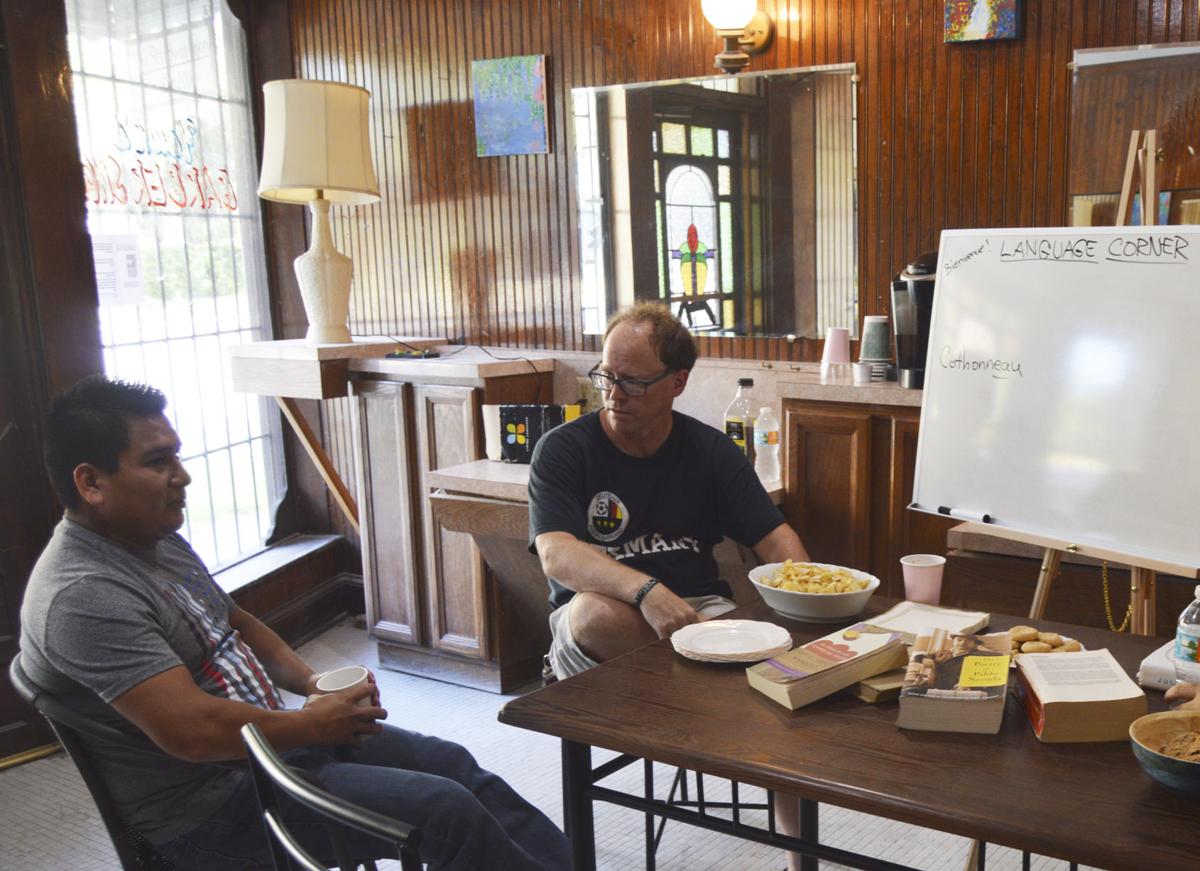
Language Corner offers chance for learning, cultural exchange
Jeff Cuttino's face lit up as the door opened and new faces stepped inside.
"Bienvenidos," he exclaimed with a smile as the attendees entered.
The greeting was happily returned as more joined the group already assembled around the table at the former barber shop turned Study on Union Street in downtown Brunswick.
Cuttino began making introductions in Spanish, pointing to those already situated around tables at the regular meeting of the Language Corner. Cuttino's wife, Sheri, smiled as she greeted the newcomers.
It's a scene that the Cuttinos hope will be repeated and even grow with time, as the group they recently started, the Language Corner, begins to take shape. The idea of learning a new language and offering a cultural exchange first began when the couple was living in Atlanta before relocating to the Golden Isles.
"We first went to the Conversation Cafe in Atlanta, where you would go and they would have coffee and snacks. You would put a name tag on with your name and the language you wanted to speak," Sheri explained. "Jeff was really into Spanish and I didn't know much Spanish. I knew a little French. So I spoke English but there were people there who wanted to practice English. It was just really neat."
The group brought together individuals from all over the world to interact and engage with one another. The goal for each was the same — learning or becoming more proficient in a language.
"They would also share how they learned a language. For example, those who were Spanish speakers learned English by watching movies or listening to the radio. They suggested that you do the same to learn Spanish," she said.
It is a concept they hope to bring to Brunswick. That's why they recently formed the Language Corner, which will meet from 6-8 p.m. every Wednesday at 1425 Union St., Brunswick. There, the Cuttinos will welcome those who want to interact in various languages in a relaxed environment.
While they haven't had many meetings, the group is already drawing interest.
"We have some people who speak French and who speak Spanish come. We have a French table and a Spanish table," Jeff Cuttino said, gesturing to the tables. "We have someone who speaks German too."
Each person who attends has his or her own reason for wanting to learn or improve their skills with a new language.
For Reuben Hernández-Artero, it is to feel more at home here. A native of El Salvador, he and his family relocated and he has been spending time with the Cuttinos to help him feel more comfortable with English.
"Reuben's reason is different than my reason of course. My motivation is that I just think it's fun," Jeff said. "But we met through the school I teach at ... and we started having them over for dinner. I will speak Spanish to him and he will correct my mistakes. I will do the same for his English. We help each other."
It offers a non-judgmental space for a language exchange, allowing speakers to use the words they don't in every day life. The knowledge and confidence is especially helpful when traveling, Sherri adds.
"We went to Paris and we got lost but we were comfortable enough to speak French and ask questions. They could understand us which was great," Sheri said.
"A lot of people speak English there but it's just nice to be able to go and at least try."
It's also a way to break down barriers, she notes.
"I know when I hear people speaking a different language that I don't understand ... you kind of think they might be talking about you — they aren't, but you think that," Sheri said with a laugh.
"But when you understand it and you feel confident to respond or speak to them, they are actually pretty impressed."
The same is true of people who move to America from foreign countries.
Having native English speakers willing to try to converse in Spanish is a welcoming and meaningful effort, Hernández-Artero said.
"That has happened to me and friends of mine too ... when you are speaking Spanish and an American comes over to you and they speak it and they speak it very well. You think ‘wow that's amazing,'" Hernández-Artero said.
"Bienvenidos," he exclaimed with a smile as the attendees entered.
The greeting was happily returned as more joined the group already assembled around the table at the former barber shop turned Study on Union Street in downtown Brunswick.
Cuttino began making introductions in Spanish, pointing to those already situated around tables at the regular meeting of the Language Corner. Cuttino's wife, Sheri, smiled as she greeted the newcomers.
It's a scene that the Cuttinos hope will be repeated and even grow with time, as the group they recently started, the Language Corner, begins to take shape. The idea of learning a new language and offering a cultural exchange first began when the couple was living in Atlanta before relocating to the Golden Isles.
"We first went to the Conversation Cafe in Atlanta, where you would go and they would have coffee and snacks. You would put a name tag on with your name and the language you wanted to speak," Sheri explained. "Jeff was really into Spanish and I didn't know much Spanish. I knew a little French. So I spoke English but there were people there who wanted to practice English. It was just really neat."
The group brought together individuals from all over the world to interact and engage with one another. The goal for each was the same — learning or becoming more proficient in a language.
"They would also share how they learned a language. For example, those who were Spanish speakers learned English by watching movies or listening to the radio. They suggested that you do the same to learn Spanish," she said.
It is a concept they hope to bring to Brunswick. That's why they recently formed the Language Corner, which will meet from 6-8 p.m. every Wednesday at 1425 Union St., Brunswick. There, the Cuttinos will welcome those who want to interact in various languages in a relaxed environment.
While they haven't had many meetings, the group is already drawing interest.
"We have some people who speak French and who speak Spanish come. We have a French table and a Spanish table," Jeff Cuttino said, gesturing to the tables. "We have someone who speaks German too."
Each person who attends has his or her own reason for wanting to learn or improve their skills with a new language.
For Reuben Hernández-Artero, it is to feel more at home here. A native of El Salvador, he and his family relocated and he has been spending time with the Cuttinos to help him feel more comfortable with English.
"Reuben's reason is different than my reason of course. My motivation is that I just think it's fun," Jeff said. "But we met through the school I teach at ... and we started having them over for dinner. I will speak Spanish to him and he will correct my mistakes. I will do the same for his English. We help each other."
It offers a non-judgmental space for a language exchange, allowing speakers to use the words they don't in every day life. The knowledge and confidence is especially helpful when traveling, Sherri adds.
"We went to Paris and we got lost but we were comfortable enough to speak French and ask questions. They could understand us which was great," Sheri said.
"A lot of people speak English there but it's just nice to be able to go and at least try."
It's also a way to break down barriers, she notes.
"I know when I hear people speaking a different language that I don't understand ... you kind of think they might be talking about you — they aren't, but you think that," Sheri said with a laugh.
"But when you understand it and you feel confident to respond or speak to them, they are actually pretty impressed."
The same is true of people who move to America from foreign countries.
Having native English speakers willing to try to converse in Spanish is a welcoming and meaningful effort, Hernández-Artero said.
"That has happened to me and friends of mine too ... when you are speaking Spanish and an American comes over to you and they speak it and they speak it very well. You think ‘wow that's amazing,'" Hernández-Artero said.
Jul 18, 2018
Learning first generation
Whenever I am asked the questions"What are you?"or"What ethnicity are you?"I always pause before replying. Having been born in America,I want to reply,"American."I celebrate the Fourth of July every year,listen to American pop music,attended American schools my entire life and grew up chasing after the American dream. However,because my Indian heritage can be traced for generations and because of how much Indian culture is a part of my day-to-day life,it also makes sense to me to reply,"Indian."I mean,I cannot count how many times I have begged my parents to take me to the Indian grocery store so that I could have kulfi or the number of pictures I have taken in traditional Indian clothing. Further,based on my appearance,people usually judge that I am Indian. So,feeling that both places are equally a part of me,I usually settle on"Indian American.”
There is no easy answer to those questions,just as there was no easy answer for me as I navigated being a first-generation Indian American growing up.
"You can't trust boys,"my mom would repeatedly tell me. Yet right after,she would turn to tell my brother,"You can't trust girls."I remember finding this funny growing up,but I never questioned it to my parents' faces. Both hailing from small villages in India,my parents had for the most part studied in schools that were single-gender. To send their kids to coeducational public schools here was an adjustment. When it came to play dates,they would encourage me to only have girl friends over,and when it came to school projects,they thought it best for me to choose girl partners.
When I started high school,I chose to go out for various extracurriculars that my school hosted. But to my parents,my focus should have been mainly,if not solely,on academia. It was there where I would get the most returns on my efforts. Despite these expectations,I went into high school open-minded. I was on my school's tennis team. I was an editor for my school paper. I joined service organizations. And while all these activities were draining,they were also what made my high school experience worthwhile — something that I think my parents see now,realizing how these experiences have helped mold me into the person I am today.
In my 10th-grade honors English class,I was assigned to read"The Joy Luck Club"by Amy Tan. Initially,I saw how thick the novel was and was scared off. We'd have a reading comprehension test on the material later,and if the material was dense,I knew I would have trouble. Yet this was not the case.
The book was on Chinese immigrant families who start the Joy Luck Club,where the woman play mahjong,and cook traditional food. This scene reminded me of my own small gatherings,where my aunts and uncles would exchange conversations about work and life with each other over traditional desi food.
These stories of daughters and their interactions with their mothers were extremely relatable. In the novel,Jing-Mei Woo talks of her mother's unwavering faith in her despite her failures. When her mother gifts her her old piano even after a failed recital,the narrator is unsure if she can play again,yet her mother pushes her anyway. The feeling of not believing in myself to the extent that my parents did was one that I could relate to.
My mother has shared that same unwavering belief in me,even when I have not believed in myself. In first grade,I had gotten third place in my class spelling bee,misspelling"direction"as"direccion."I ran into her arms crying,swearing that I would never attempt a spelling bee again. Yet she was calm,encouraging me anyway. Next year would be my year,she promised. She started giving me dictations to help me practice my spelling,and the next year,I did in fact win my class spelling bee. Reading the stories of other first-generation Americans has helped me realize that my experiences are not unique to me. They are universal,even if they are not national.
I understand the troubles my parents had raising my brother and me,having to move from a small village in India to a place that was foreign and different. The values that they brought with them were conservative,and helping them to see that certain aspects that were unique to American culture did not necessarily entail bad consequences for us children has been difficult. I mean,having a guy lab partner was not the end of the world,and neither was losing a spelling bee. I learned to find a harmony,showing my parents that I still respected their culture and cherished our roots while assimilating to life in America.
There is no easy answer to those questions,just as there was no easy answer for me as I navigated being a first-generation Indian American growing up.
"You can't trust boys,"my mom would repeatedly tell me. Yet right after,she would turn to tell my brother,"You can't trust girls."I remember finding this funny growing up,but I never questioned it to my parents' faces. Both hailing from small villages in India,my parents had for the most part studied in schools that were single-gender. To send their kids to coeducational public schools here was an adjustment. When it came to play dates,they would encourage me to only have girl friends over,and when it came to school projects,they thought it best for me to choose girl partners.
When I started high school,I chose to go out for various extracurriculars that my school hosted. But to my parents,my focus should have been mainly,if not solely,on academia. It was there where I would get the most returns on my efforts. Despite these expectations,I went into high school open-minded. I was on my school's tennis team. I was an editor for my school paper. I joined service organizations. And while all these activities were draining,they were also what made my high school experience worthwhile — something that I think my parents see now,realizing how these experiences have helped mold me into the person I am today.
In my 10th-grade honors English class,I was assigned to read"The Joy Luck Club"by Amy Tan. Initially,I saw how thick the novel was and was scared off. We'd have a reading comprehension test on the material later,and if the material was dense,I knew I would have trouble. Yet this was not the case.
The book was on Chinese immigrant families who start the Joy Luck Club,where the woman play mahjong,and cook traditional food. This scene reminded me of my own small gatherings,where my aunts and uncles would exchange conversations about work and life with each other over traditional desi food.
These stories of daughters and their interactions with their mothers were extremely relatable. In the novel,Jing-Mei Woo talks of her mother's unwavering faith in her despite her failures. When her mother gifts her her old piano even after a failed recital,the narrator is unsure if she can play again,yet her mother pushes her anyway. The feeling of not believing in myself to the extent that my parents did was one that I could relate to.
My mother has shared that same unwavering belief in me,even when I have not believed in myself. In first grade,I had gotten third place in my class spelling bee,misspelling"direction"as"direccion."I ran into her arms crying,swearing that I would never attempt a spelling bee again. Yet she was calm,encouraging me anyway. Next year would be my year,she promised. She started giving me dictations to help me practice my spelling,and the next year,I did in fact win my class spelling bee. Reading the stories of other first-generation Americans has helped me realize that my experiences are not unique to me. They are universal,even if they are not national.
I understand the troubles my parents had raising my brother and me,having to move from a small village in India to a place that was foreign and different. The values that they brought with them were conservative,and helping them to see that certain aspects that were unique to American culture did not necessarily entail bad consequences for us children has been difficult. I mean,having a guy lab partner was not the end of the world,and neither was losing a spelling bee. I learned to find a harmony,showing my parents that I still respected their culture and cherished our roots while assimilating to life in America.
Subscribe to:
Posts (Atom)